Portable fusion reactor
Overview
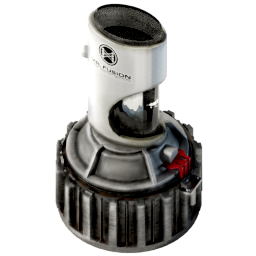
Portable fusion reactor is an equipment module that provides on-board power generation through a fluid-based fusion system. It is designed to be placed in armor or vehicles, where it supports other equipment by producing electricity from plasma generated inside the reactor network.
Its key mechanic is the neighbour bonus. Like nuclear reactors, portable fusion reactors gain additional output when operating reactors are placed adjacent to one another, but the requirement is looser: each linked neighbor only needs to share one fluid connection instead of three heat connections. Connecting both outputs of a reactor to the same neighboring reactor does not grant extra benefit. Since reactors have two fluid connections on each side, the practical maximum bonus while still leaving room to insert fusion power cells is +500%.
The neighbour bonus directly affects the temperature of the plasma created by the reactor. Without any bonus, the generated plasma is at 1 million °C. Each 100% bonus increases this by another million degrees, so a reactor at +100% produces plasma at 2 million °C, and so on. In an array, individual reactors may produce plasma at different temperatures, and these temperatures average out within the shared plasma fluid system. Fusion generators then draw power from the heat of the plasma they consume, up to 50 MW per generator.
Fuel usage is simpler than the output scaling. The amount of cold fluoroketone consumed per second does not change with the neighbour bonus; a reactor always uses 4/s at full draw, modified only by quality. Because of this, adjacent reactors do not increase coolant consumption per reactor, but larger arrays still require a larger fluid network to hold and move the coolant and plasma. Once the system is filled, it does not need constant manual replenishment so long as the fluid loop remains intact.
When planning a fusion setup, the important distinction is that more reactors increase both temperature potential and total throughput, but generators still cap at their own maximum output. The practical ratios for supported power are:
- 1 reactor and 2 generators: 100 MW
- 2 reactors and 8 generators: 400 MW
- 3 reactors and 18 generators: 900 MW
- 4 reactors and 28 generators: 1400 MW
In short, portable fusion reactors reward compact, chain-like layouts that maximize adjacency while preserving fluid connection points for fuel cell insertion. A well-arranged cluster can produce very large amounts of portable power, but the actual gain depends on how much neighbour bonus the array can sustain and how many fusion generators are connected to consume the resulting plasma.