Pipe
Overview
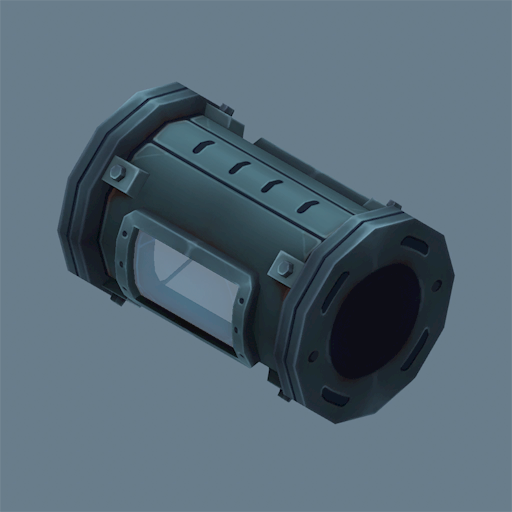
Pipe is a building-category conduit used to transport fluids between structures and sources. Pipes form the basic links of a Pipe Network: they connect Pipe Intakes, Boilers, and other fluid-using or fluid-supplying buildings to allow water (and any other supported fluids) to flow between ports and reservoirs.
Pipes are placed to create continuous connections; adjacent buildings with compatible ports can be connected directly, or Pipes can be used to bridge gaps and route fluid around obstacles. A Pipe Intake must be submerged in a body of water and connected to the network with a Pipe to supply the network. A single Pipe Intake provides 30,000 Liters per minute (500 L/s) to the network. The network itself has a fixed maximum throughput of 36,000 L/min (600 L/s) unless additional Intakes are added; two Pipe Intakes are required to fully saturate the network capacity for peak demand.
Boilers and other consumers draw water through Pipes. Each Boiler counts toward a Pipe Network’s complexity: with the Update 2 complexity rules, each Boiler contributes 5 complexity (equal to its width) to the Pipe Network it is attached. Complexity limits affect how many and which buildings a single Pipe Network can support, so planning routing and Intake placement is important when scaling production.
Practical notes for using Pipes
- Place Pipe Intakes where they remain submerged; a disconnected Intake supplies no water. Use Pipes to bridge from coastal or inland water to interior Boiler clusters.
- Daisy-chaining Boilers directly is possible when ports align, but Pipes permit more flexible layouts and avoid forcing buildings into constrained adjacency.
- Monitor network throughput: a single Intake supports up to 25 Boilers at full capacity, but the overall Pipe Network cap (36,000 L/min) and complexity costs (per Boiler) determine the actual sustainable count.
- When expanding, add additional Pipe Intakes and consider splitting high-demand consumers across multiple Pipe Networks to avoid hitting the maximum throughput or complexity limits.
Made by (1)
References to this (10)
Other entities of this type
- Advanced Smelter
- Assembler I
- Assembler II
- Assembler III
- Assembly Line Merger
- Assembly Line Painter
- Assembly Line Producer
- Assembly Line Rail
- Assembly Line Splitter
- Assembly Line Start
- Battery (Large)
- Battery (Small)
- Biomass Burner
- Boiler
- Burner Generator
- Cargo Ship Start Pad
- Cargo Ship Start Pad (Liquids)
- Cargo Ship Target Pad
- Cargo Ship Target Pad (Liquids)
- Casting Machine
- Chemical Processor
- Construction Ship Port
- Construction Warehouse
- Container
- Conveyor Balancer I
- Conveyor Balancer II
- Conveyor Balancer III
- Conveyor Balancer IV
- Conveyor I
- Conveyor II
... +72 (see sidebar for full list)