Slime
Overview
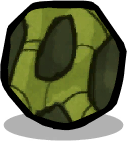
Slime is an organic resource found primarily in the Swamp Biome and in some ruins. It also appears as scattered slime balls on maps with the Slime Molds World Trait, can be collected from certain Space POIs, and is produced by Pufts and Puft Princes. Because it is a biome material with germ-related hazards, Slime is usually more of a contamination and logistics problem than a simple stockpile resource.
When dug up, Slime emits Polluted Oxygen and loses mass over time, even while stored in a Storage Bin. This off-gassing can be prevented by keeping it submerged in a liquid or under gas pressure of at least 1.8 kg/tile. If the Slime itself is already infected, digging it up can spread Slimelung through the released Polluted Oxygen and nearby polluted environments, so swamp excavation often requires some kind of containment plan. The thermal conductivity of Slime is comparable to Algae and Sedimentary Rock, and its low mass means neighboring Slime tiles exchange heat quickly.
Heat is one of the main ways to manage infected Slime. Slimelung dies at temperatures below 20°C and above 90°C, so Slime tiles can be disinfected before digging by holding them in that range long enough. Slime itself turns into Dirt when heated above 125°C; if it is in debris form and reaches that temperature, it will form a natural Dirt tile. This makes temperature control useful, but also dangerous, because overshooting the target can destroy the Slime before it is collected.
Common handling and usage include:
- Algae Distiller: converts Slime into Algae and Polluted Water, making it a renewable source of Algae if you have enough Slime.
- Dusk Cap farming: domestic growth requires Slime, so it is a key ingredient for this mushroom crop.
- Sage Hatches: can eat Slime and produce Coal.
- Airborne Critter Bait: Slime can be used to attract Pufts and Puft Princes.
- Polluted Oxygen production: if left exposed, Slime can be used intentionally as a source of Polluted Oxygen.
For swamp cleanup, the most reliable approach is often to isolate or remove polluted air and polluted water first, then store dug-up Slime in a sterile environment. Chlorine disinfects infected Slime efficiently after a full cycle, while Deodorizers can help by cleaning up the Polluted Oxygen released during excavation. In practice, large-scale Slime cleanup is labor-intensive, and any method that relies on temperature control or chilled liquid containment must also account for the risk of heating the Slime into Dirt or letting it continue to off-gas.
References to this (25)
- biomeBiome
- biomeMarsh Biome
- biomeMetallic Biome
- biomeSwampy Biome
- buildingAlgae Distiller
- buildingOre Scrubber
- buildingRocket
- buildingSpice Grinder
- buildingSublimation Station
- critterPokeshell
- critterPuft
- critterShine Bug
- diseaseDiarrhea
- diseaseFloral Scent
- diseaseSlimelung
- elementAlgae
- elementCopper Ore
- elementDirt
- elementMolten Glass
- elementPhyto Oil
- elementPolluted Oxygen
- elementPondscum
- elementTest Element
- foodMushroom
- plantDusk Cap