Cattail cracker
Overview
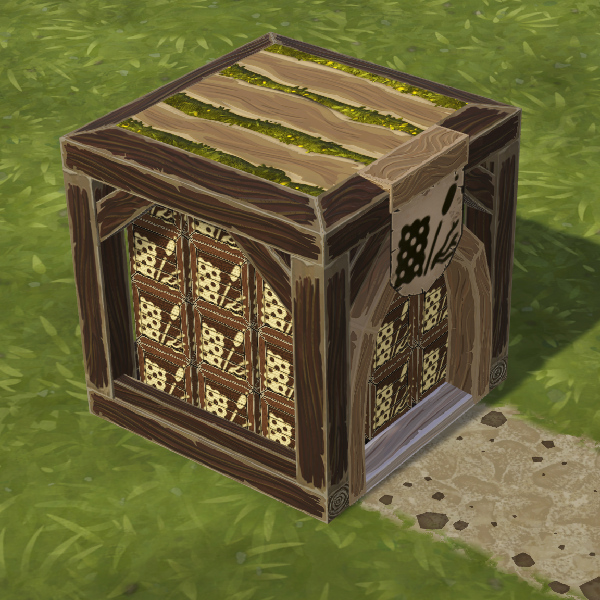
Cattail cracker are a processed food item used in Timberborn. They are produced from cattail plants through a short multi-step manufacturing chain that converts harvested plant material into a storable baked good.
Production of cattail crackers requires agricultural production followed by processing and baking. Farmers must cultivate and harvest cattail plants, the harvested cattails are then ground into flour, and that flour is baked into cattail crackers. Because cattail crackers are classified as a processed food, their production involves additional requirements beyond simple raw food gathering and requires coordination between farms, grinding, and baking facilities.
- Farmers must be assigned to grow and harvest cattail plants so the raw material supply is continuous.
- Harvested cattails need to be transported or transferred to a grinding facility where they are ground into flour.
- The resulting flour must be delivered to a baking facility to produce cattail crackers.
Practical notes for managing production and supply:
- Keep the agricultural area producing cattails close to processing buildings to reduce delays in moving harvested material to the grinder and then to the bakery.
- Maintain sufficient storage of intermediate goods (harvested cattails and flour) to buffer production when one stage temporarily stops or when workforce allocation changes.
- Ensure labor is allocated across farming and processing roles so that neither cultivation nor manufacturing bottlenecks production of the final cattail crackers.
- Treat cattail crackers as part of the processed-food logistics chain; plan building placement and road/transport paths to support continuous flow from field to grinder to bakery.
Cattail cracker provide a durable, baked food option when produced consistently, but they require a functioning multi-stage supply chain rather than a single-step gathering or cooking action.
References to this (5)
Other entities of this type
- Algae ration
- Algae ration
- Berries
- Bread
- Carrot
- Carrots
- Cattail cracker
- Corn ration
- Corn ration
- Eggplant ration
- Eggplant ration
- Fermented cassava
- Fermented mushroom
- Fermented mushroom
- Fermented soybean
- Fermented soybean
- Grilled chestnuts
- Grilled chestnuts
- Grilled potato
- Grilled potatoes
- Grilled spadderdock
- Kohlrabies
- Mangrove fruit
- Maple pastries
- Maple pastry
- Sunflower seeds