Tundra Biome
Overview
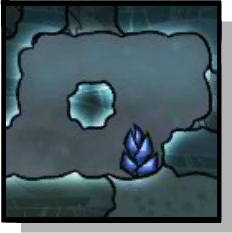
The Tundra Biome is a cold biome found on many asteroids, most notably in the starting area of cold worlds and in nearby regions with low ambient temperatures. It is defined by its frozen terrain, breathable air in many areas, and a lack of native critters in the base version. The biome’s temperature range is extremely cold, typically spanning from -183 to -16.15 °C in the base version, while the Swampy Asteroid variant is limited to a narrower cold range of -30 to -16.15 °C.
Its contents are centered around ice and other frozen materials rather than metals or living resources. In the base version, the biome can contain buried cold geysers, ruins, and an Anti Entropy Thermo-Nullifier as points of interest. Sometimes Liquid Carbon Dioxide may appear naturally because of the low temperatures. The biome usually has no critters, no plants listed as part of the biome itself, and no gas hazards that prevent early entry, which makes exploration relatively straightforward.
The Tundra Biome is useful early and mid game for two main reasons: heat management and food production. Because it contains a large amount of Ice, it can serve as an effective heat sink for early industrialization, helping absorb excess heat for a long time before needing more advanced cooling systems. This makes it a practical place to dump unwanted heat when nearby base temperatures start climbing. Its cold environment also supports wild Sleet Wheat, which is valuable as a late-game food source, and Wheezeworts, which provide low-power cooling and can also generate a significant amount of radiation for early Applied Sciences Research.
There is an important mining difference to keep in mind when harvesting frozen terrain. Melting Ice and Snow tiles directly produces twice as much water as mining them first and then melting the resulting debris. For that reason, direct melting is usually the better option when the goal is water recovery. However, care is needed when venting heat into the biome, since excessive warming can disrupt wild Sleet Wheat and reduce its usefulness as a food source.
A few practical notes make the biome especially valuable:
- It is generally safe to explore early because the air is breathable and the temperature, while harsh, does not cause Frostbite by itself.
- Wild Wheezeworts are among the simplest early cooling tools and remain useful even later for radiation and temperature control.
- If you need water, melting Ice and Snow tiles directly is more efficient than mining them first.
- If you need a temporary place to absorb heat, the biome’s large ice reserves make it an effective buffer against overheating.
- Be careful not to overheat areas containing wild Sleet Wheat, since losing those plants can reduce the biome’s long-term value.
References to this (3)
Other entities of this type
- Aquatic Biome
- Barren Biome
- Biome
- Cool Pool Biome
- Feather Biome
- Forest Biome
- Garden Biome
- Ice Cave Biome
- Jungle Biome
- Magma Biome
- Marsh Biome
- Metallic Biome
- Moo Biome
- Nectar Biome
- Niobium Biome
- Ocean Biome
- Oily Biome
- Radioactive Biome
- Regolith Biome
- Rust Biome
- Sandstone Biome
- Space Biome
- Swampy Biome
- Wasteland Biome
... +1 (see sidebar for full list)